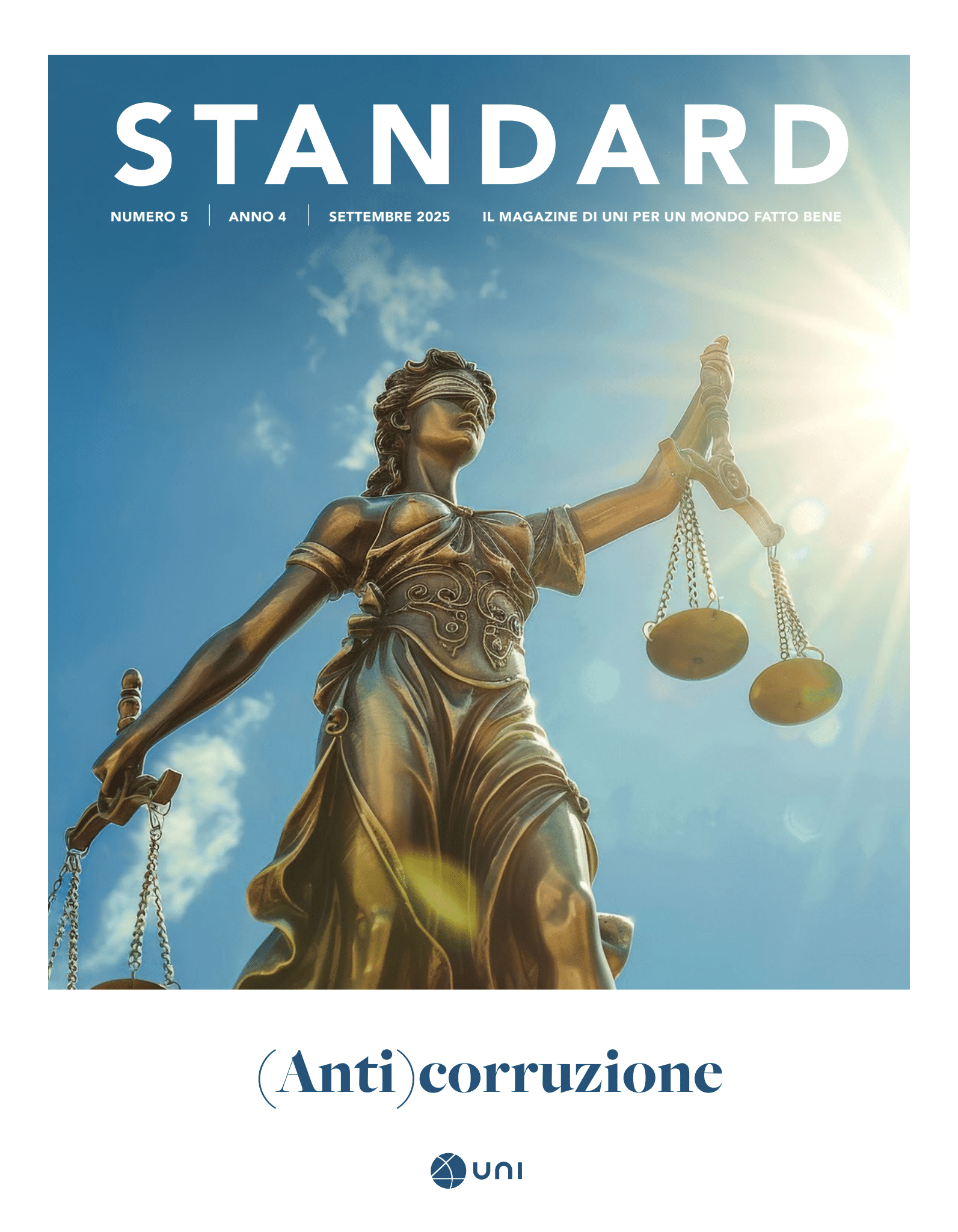
In the September 2025 issue of STANDARD Magazine, the official publication of UNI – the Italian Standardization Body, entirely dedicated to the topic of anti-corruption, a particularly significant contribution by Dr. Cindy Martine Grasso is featured. The article explores the strategic role of anti-corruption whistleblowing within modern risk prevention systems and the protection of organizational integrity.
Dr. Grasso, CEO of CMG Swiss Sagl, Vice President of Assocompliance, and member of the UNI/CT 016/GL 09 “Organizational Governance” Working Group, provides a clear and practical analysis of whistleblowing as a key element of ethical governance. The contribution is published on pages 20–21 of both the print and digital editions of STANDARD Magazine.
From reporting channel to strategic lever of the anti-corruption system
In her article, Dr. Grasso highlights how the fight against corruption does not end with judicial proceedings or inspections, but is primarily developed in the daily operations of organizations. Every company, whether public or private, can become fertile ground for misconduct, compromises, or regulatory violations.
In this context, anti-corruption whistleblowing proves to be an essential tool not only for reporting irregularities but also for strengthening a culture of transparency, protecting whistleblowers, and enabling timely intervention in the presence of potential risks. The article also refers to the regulatory developments introduced by Legislative Decree 24/2023, which has expanded the rights and protections for those reporting violations of European and national law.
The role of UNI and ISO standards in fostering a culture of transparency
A key part of the contribution focuses on the importance of technical standards as operational support for governance. UNI ISO 37002, dedicated to whistleblowing management systems, is identified as a fundamental reference for structuring processes based on trust, impartiality, and whistleblower protection.
According to Dr. Grasso, these principles enable organizations to develop credible and effective procedures capable of ensuring independent investigations, thereby strengthening the overall reliability of anti-corruption prevention systems. Whistleblowing is also linked to the achievement of the United Nations Sustainable Development Goals, particularly SDG 16, SDG 8, and SDG 12.
Ethics and reputation as strategic assets
The article concludes with a key message: investing in whistleblowing systems means protecting corporate reputation, increasing stakeholder trust, and reducing operational, legal, and reputational risks. Transparency is therefore not only a regulatory obligation but also a strategic and competitive choice.
Dr. Cindy Martine Grasso’s contribution to STANDARD Magazine confirms CMG Swiss’s commitment to promoting a culture of ethical governance and integrated compliance, strengthening the company’s role as an authoritative reference at both national and international levels.